Our foundation is an Agentic Twin™ — an AI expert for every asset and process.
Built from foundational asset knowledge, physics principles and your plant’s own data, then certified by experts.
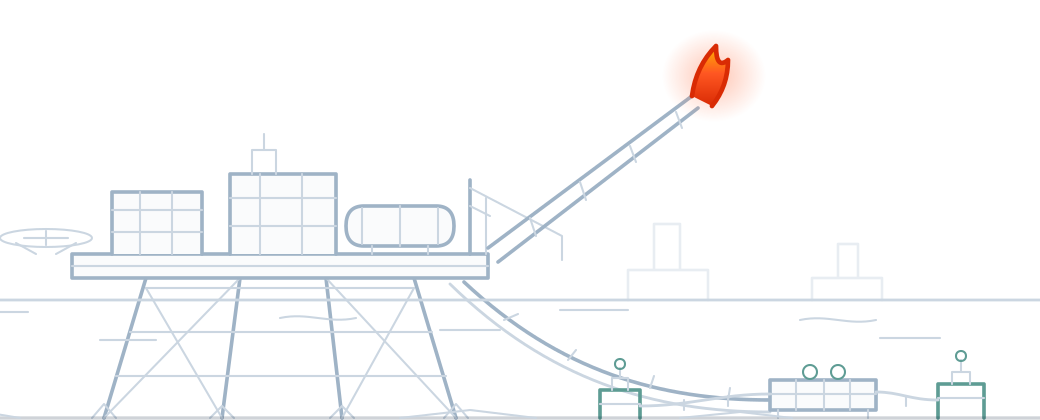
Asset ontology, industry and OEM documents and SME input are ingested to create the first version of the Agentic Twin.
Ontology / docs
OEM / SME input
P&ID / plant docs
Historian / O&M
ML Models
Diagnostics
False positives
Optimization
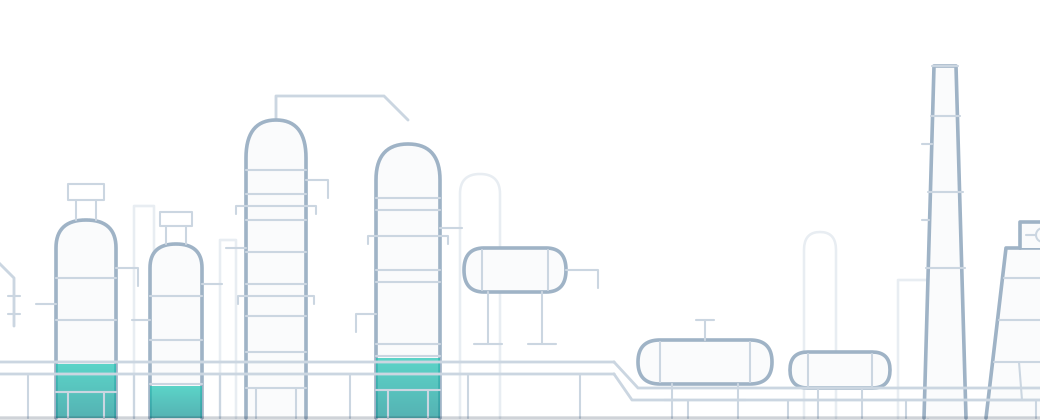
Plant documents and topology are layered in, adding FMEA++, subsystem boundaries and base physics models.
Ontology / docs
OEM / SME input
P&ID / plant docs
Historian / O&M
ML Models
Diagnostics
False positives
Optimization
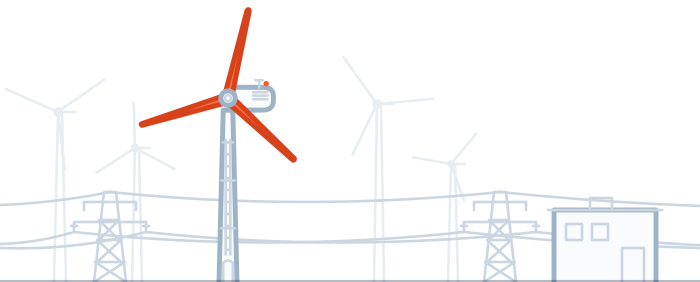
Historian data, O&M logs and expert review teach the twin real operating modes and known failure signatures.
Ontology / docs
OEM / SME input
P&ID / plant docs
Historian / O&M
ML Models
Diagnostics
False positives
Optimization
With a behaviorally complete twin, specialized agents take over, each an autonomous solution on the platform.
Ontology / docs
OEM / SME input
P&ID / plant docs
Historian / O&M
ML Models
Diagnostics
False positives
Optimization