Performance Optimization

Transform Suboptimal or Lost Operations
into Optimal Performance

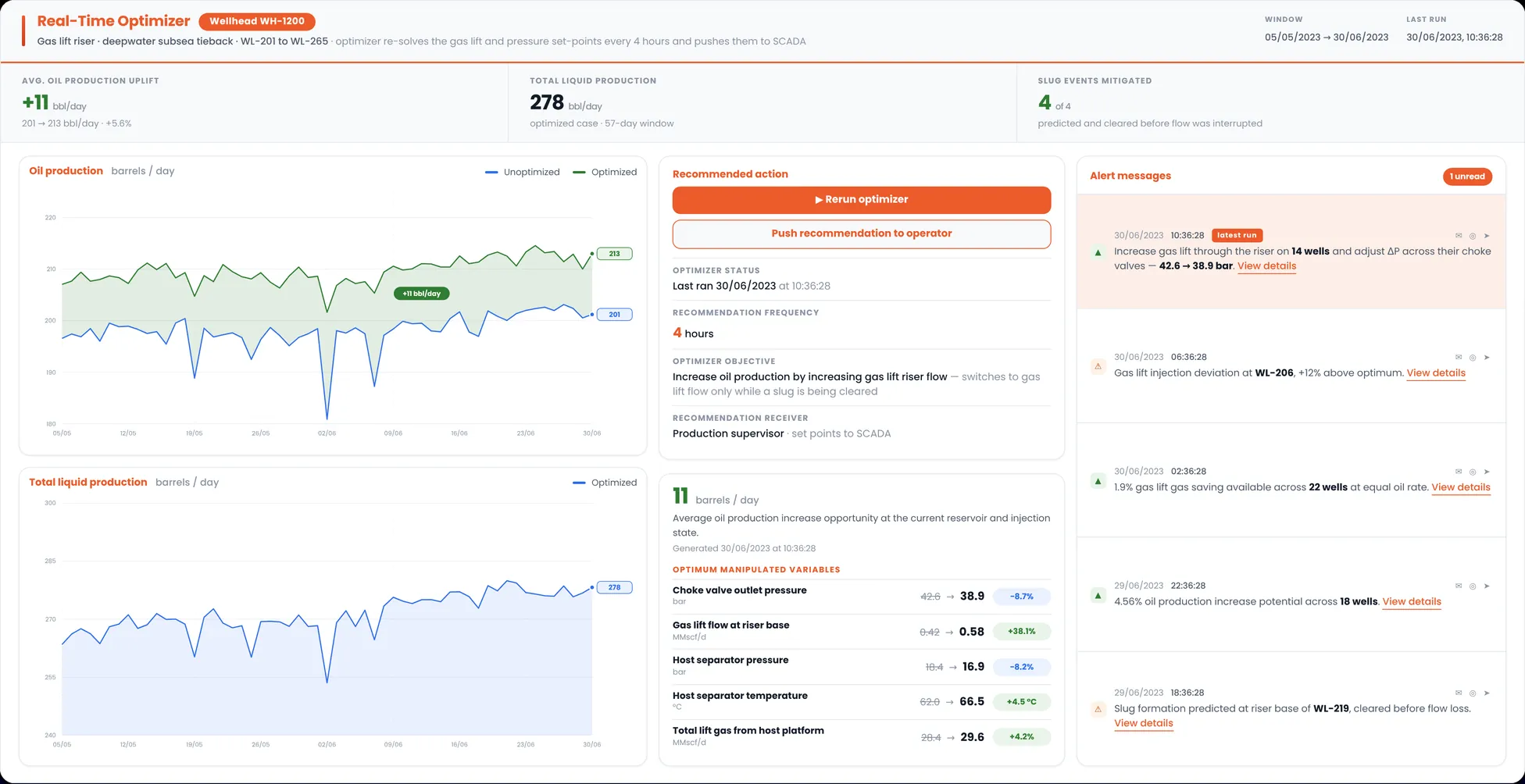
Real-Time Optimization finds the true operating optimum for an asset or plant. An Operational Performance Twin and an AI Optimizer adjust operating variables with the guidance of an AI Agent within real plant constraints.

Maximized production, power generation and yield
Maximized profit per hour
Minimized energy consumption
Identified debottleneck opportunities
Operating surface · Chlor-Alkali PlantReading live plant data
Current efficiency0%
Electrolyzer capacity
Energy per ton
2,148kWh/t−5.0%
Margin per hour
1,840USD+19%
Recommended setpointsIssued to DCS console
Current density
5.85.5kA/m²
Brine feed temp
57.264.7°C
Caustic flow inlet
122.1124.5m³/hr
Caustic inlet temp
81.285.0°C
Cell ΔP
20.5621.84mbar
Caustic outlet conc
31.232.0%
KEY CAPABILITIES

How Real-Time Optimization finds the optimum.

01

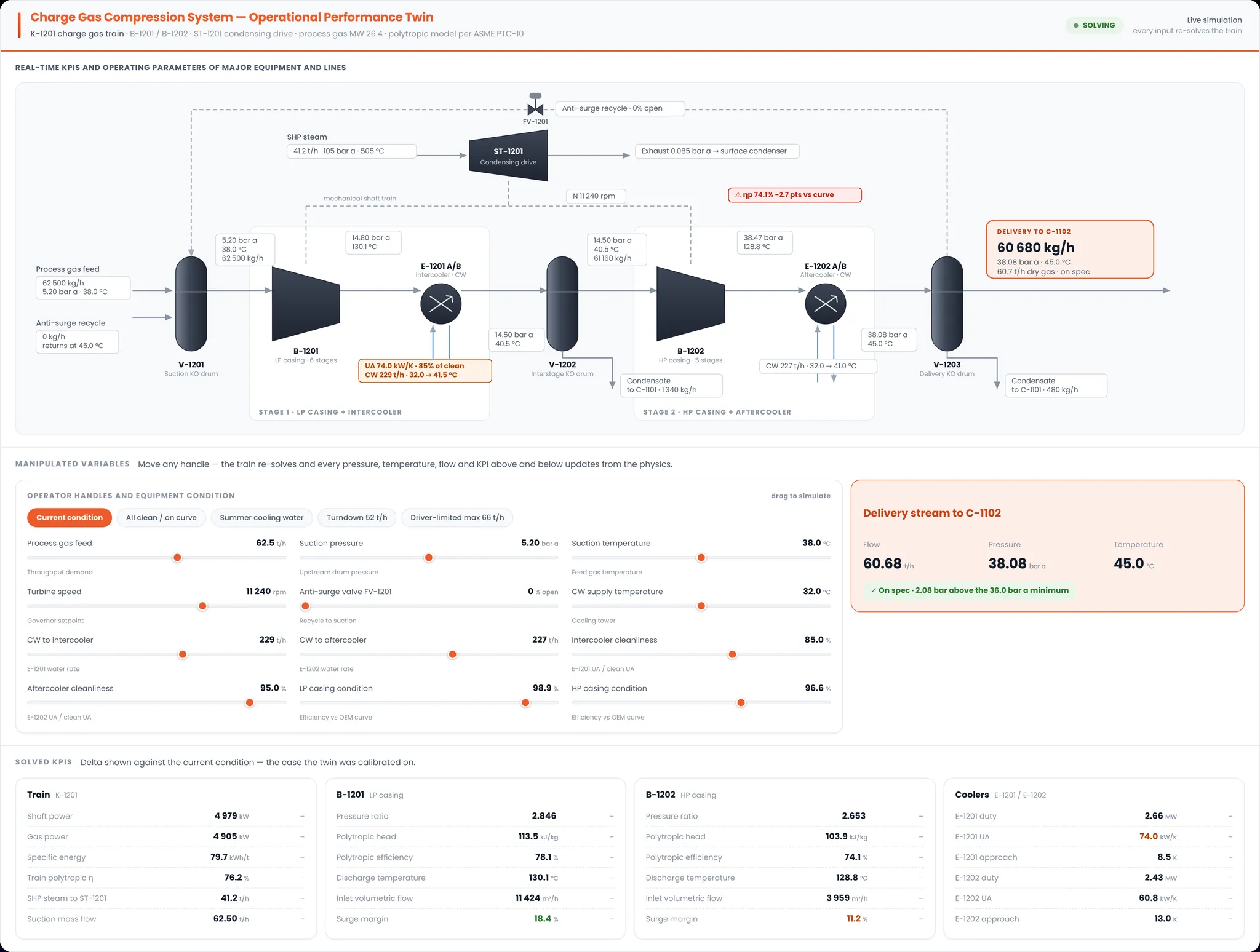
Operational Performance Twin

A simulation of machine and process behavior, built from the plant’s own historical operating data using AI together with first principles of physics. It responds to a change the way the real unit would.

  • Learned from historical operating data
  • Bounded by physics and heat and mass balance
  • Also used for what-if analysis
Operational Performance Twin
02

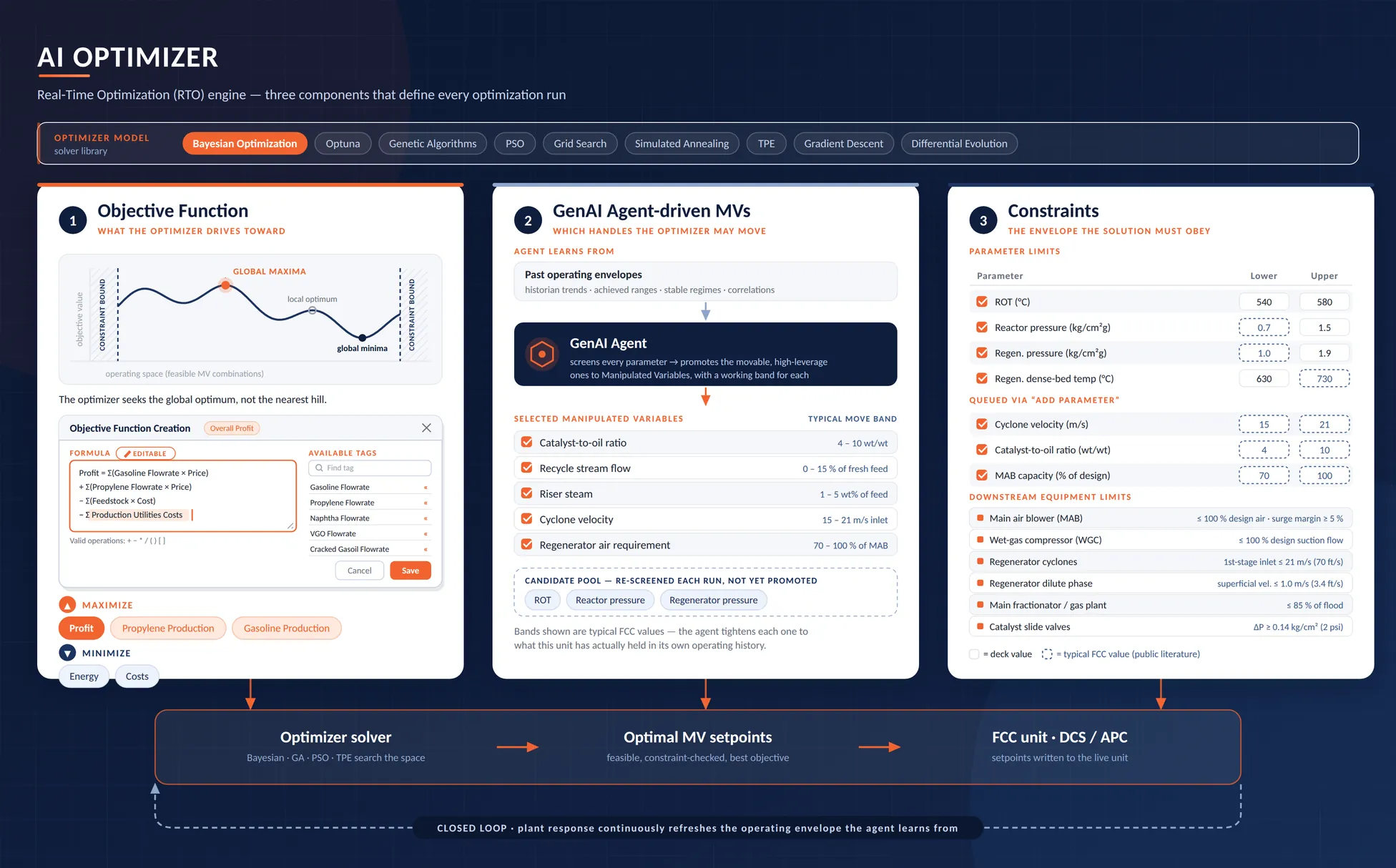
AI Optimizer with AI Agent-driven MVs

The optimizer carries the objective function (production, yield, profit or energy) along with the constraints: parameter limits and the limits of downstream equipment. It searches for the best achievable operating point inside those bounds. The GenAI Agent identifies the best possible manipulated variables from the AI Optimizer at that moment, and changes them in the Operational Performance Twin to test whether the objective function improves.

  • Objective functions can be multiple and in priority
  • Parameter and downstream equipment constraints
  • Selects which MVs to move, and by how much
AI Optimizer with AI Agent-driven MVs
03

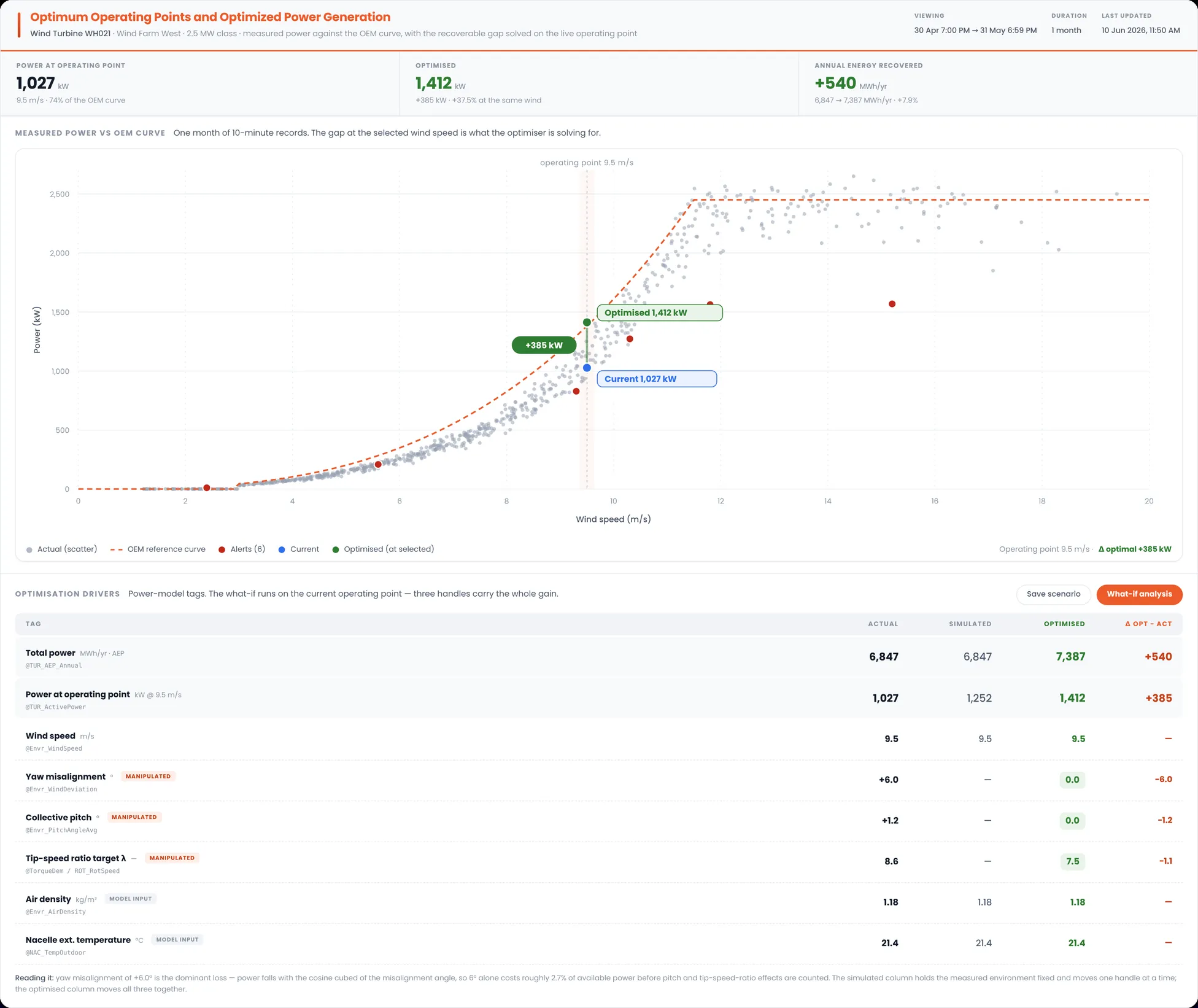
Optimum Operating Points

After a few iterations between the AI Optimizer and the Operational Performance Twin through the GenAI Agent, the optimum new set points of the manipulated variables are identified, ready to be implemented in the DCS.

  • Converged set points per MV
  • Expected effect on the objective
  • Re-run on schedule and on significant change
Optimum Operating Points
04

Recommendations in Open Loop or Closed Loop

In open loop, RTO sends the optimum set points to operators for review and implementation in the DCS. In closed loop, the same set points are pushed directly to DCS controllers or the APC.

  • Open loop: reviewed by operator, implemented by DCS engineer
  • Closed loop: set points pushed to DCS controllers or APC
  • Same recommendation either way
Recommendations in Open Loop or Closed Loop
PROVEN IN PRODUCTION · USE CASES

Measured on real units.

$8–9Madded per year

Refinery FCC Unit Optimization

THE CHALLENGE

A Middle East refiner running a 105 kbpd FCC unit on design-era set points. Feedstock, demand, and plant behavior had all shifted since, leaving the unit short of its true potential, with no safe way to find where optimal was.

THE SOLUTION

A physics- and data-driven plant model paired with an AI Optimizer that pushes independent variables to their limits within constraints. It runs every four hours, and on any major shift in feed or conditions, delivering set points to the DCS engineer in open loop.

THE IMPACT

$8–9M per year in added benefit, with the model also serving as a what-if tool for feedstock and demand changes.