Your alarm tells you it happened.
We tell you it’s coming.
Process Reliability brings Agentic AI to the production process, predicting upsets, quality excursions, and abnormal conditions early enough to act. Trained on the plant’s own operational data and engineering knowledge, its GenAI modules provide plant-specific root cause analysis and recommendations to mitigate issues before they escalate.
TWIN™
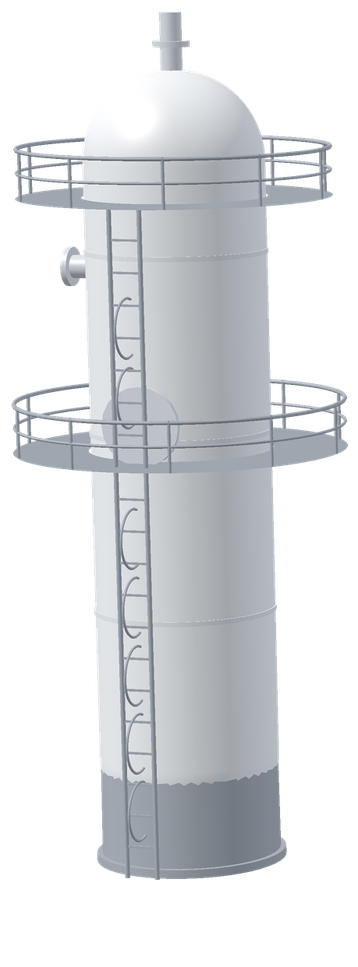
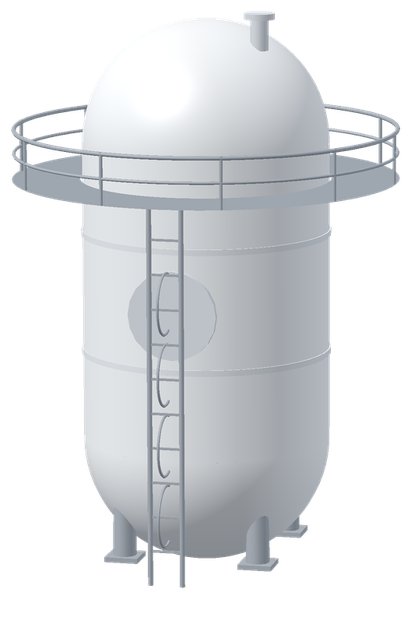
Absorber foaming
High foam carryover in the absorber overhead.
Confidence 0.9Increase antifoam.
Reduce feed 4%.
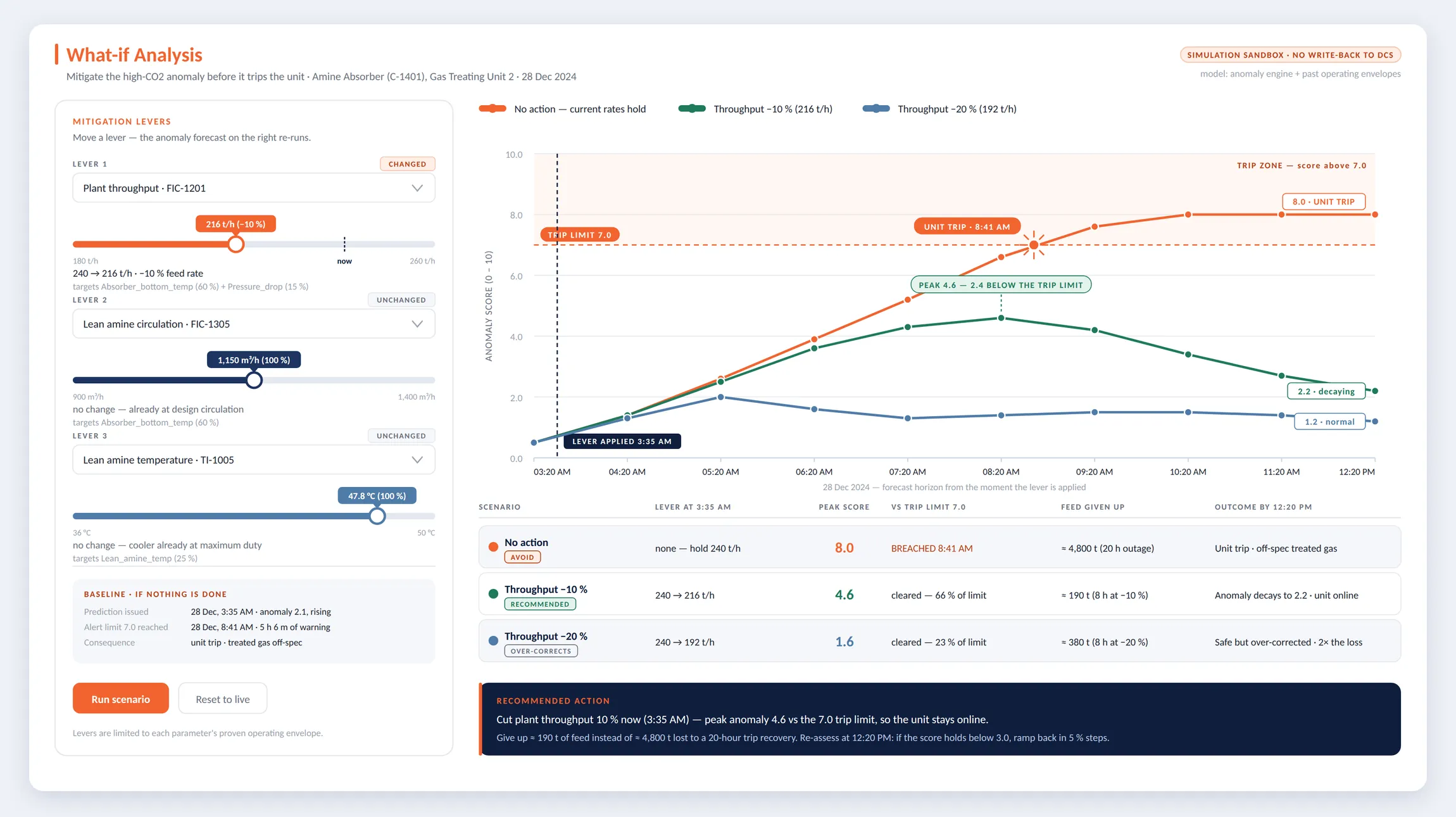
Test it on the model first
Run analysis →Precursor Detection Well Before Alarm Thresholds
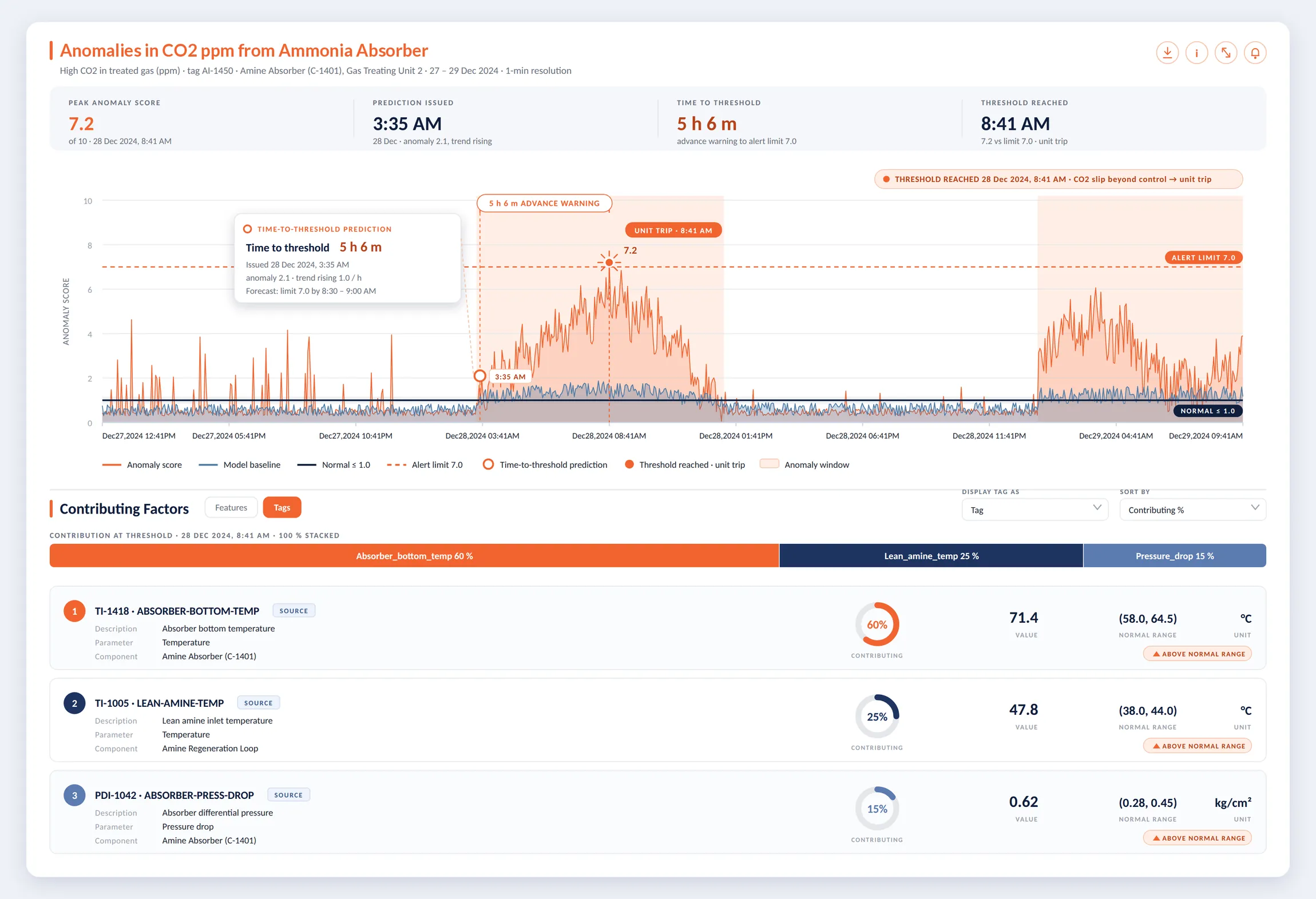
Models trained on each unit’s real operating history watch every process variable together, not one tag at a time. Drifts and interactions that stay inside alarm limits are surfaced as precursors, hours before a DCS alarm would fire.
- Multivariate models for various operating modes of the system
- Upstream precursors help upset detection in the system early
- Deviated KPIs or anomaly score represents deviation from normal
Time to Threshold Prediction
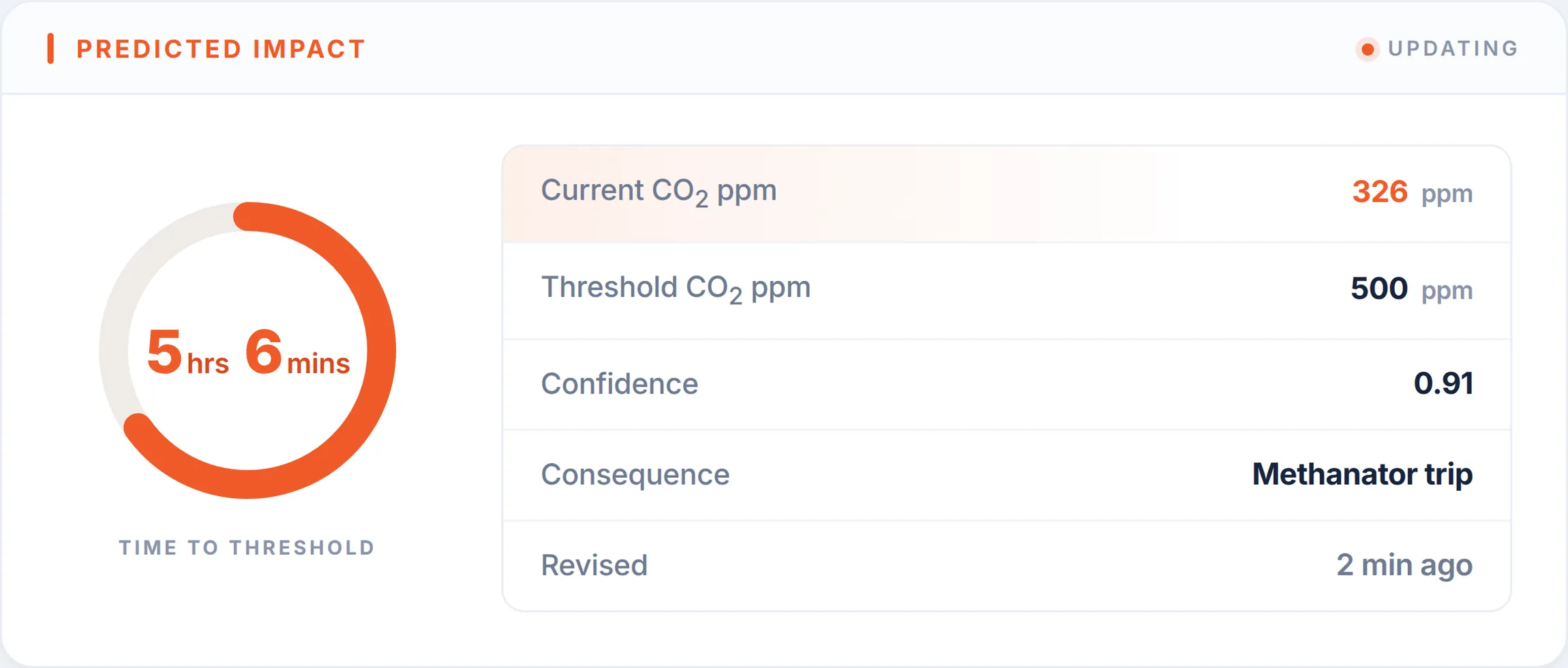
Every detection carries a forecast: how long until the variable crosses its limit at current conditions. Operators get a window to act in, and the forecast updates as the process moves.
- Remaining time to threshold with each detection
- Continuously revised as operating conditions change
- Confidence and drivers shown alongside the number
Root Cause Analysis on Process Knowledge
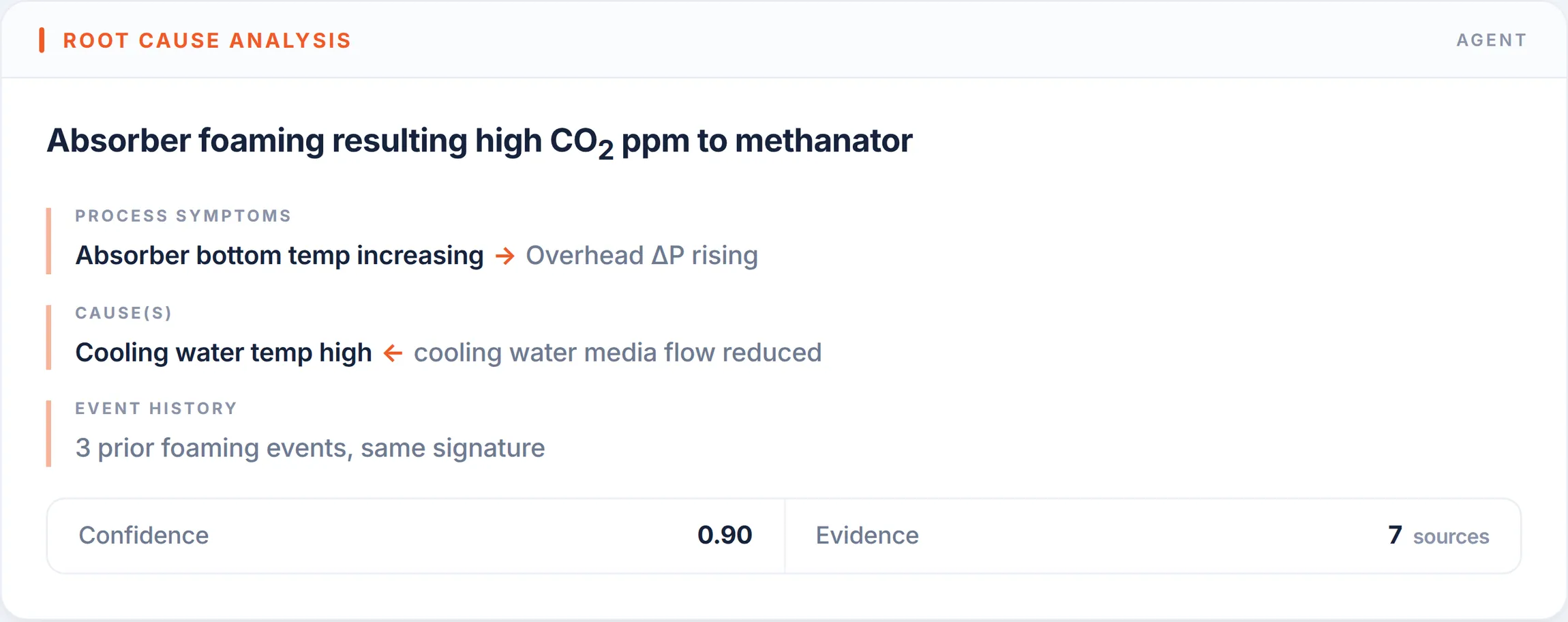
The GenAI Agent reasons over the Agentic Twin™ (process dependencies, engineering knowledge, LIMS records, event and alarms history) to name the cause of the upset and explain how it will progress.
- Cause named, not just an anomaly score
- Grounded in plant documents, LIMS and event history
- Evidence trail your engineers and operator can audit and correct
Corrective Action & What-If Analysis
Each diagnosis arrives with the operating move that resolves it, and what-if analysis to test alternatives before committing: hold rate, change a set point, or extend the run to the next planned window.
- Corrective action ranked by expected effect
- What-if comparison across operating options
- Extends the run window when a shutdown has to wait
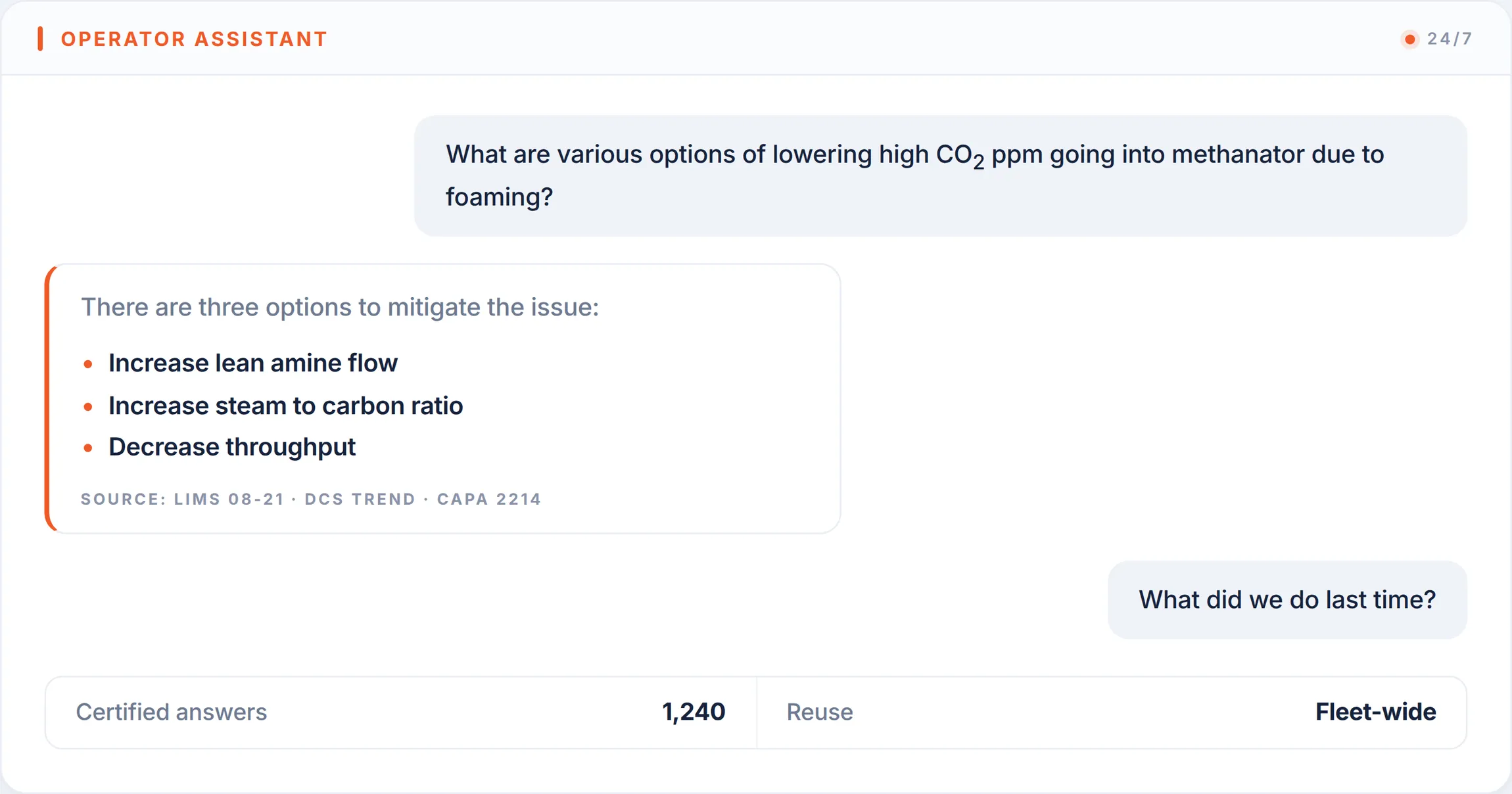
Operator Assistant & Knowledge Capture
Any operator can ask the agent what is happening and why, in plain language, and get an answer sourced from the plant’s own records. Every confirmed diagnosis and correction is captured, certified and reused on the next occurrence.
- 24/7 assistant for any process question
- Answers cite the source record
- Confirmed corrections become certified, reusable knowledge
Different plants. Different upsets. One Agentic Twin™.
CO₂ excursion prediction from the amine absorber
Foaming in the amine absorber let CO₂ slip downstream, overheating the methanator and tripping full plant shutdowns. Each event cost production and revenue, and the first sign of it was the trip.
Detected and predicted the CO₂ excursion early, caused by absorber foaming. GenAI root cause analysis with recommendations to manage the upset. Predicted remaining time to threshold, with what-if analysis for corrective action.
Unplanned shutdowns and production loss avoided, with a 24/7 operator assistant for any process question.
Cobble prediction in the rolling mill
Cobbles in the rolling mill hit production, safety and reliability at once. Operators and technicians only learned of an event after it had already happened.
Built an anomaly detection model on historical data to predict cobble events early, plus GenAI root cause and recommendation modules trained on the client’s own event logs, CAPA records and plant documents.
Predictive alerts before the event, with root cause and actions, and safer operations with fewer emergency interventions.
Product scrap reduction & quality enhancement
Off-spec product was found at end-of-line inspection, after the material had already been made. Process drift across machine settings, material lots and ambient conditions was only reconstructed after a scrap batch, and quality engineers could not say which variable moved first.
Multivariate models linked process parameters to quality outcomes per product grade and operating mode, flagging drift toward off-spec while the batch was still correctable. GenAI root cause analysis ranked the contributing variables and recommended set point corrections, grounded in the plant’s own quality records and SOPs.
Scrap and rework reduced, first-pass yield improved, and quality deviations corrected in-process instead of after inspection.